Bronchology · Pediatric Stent

Stening® Straight Paediatric

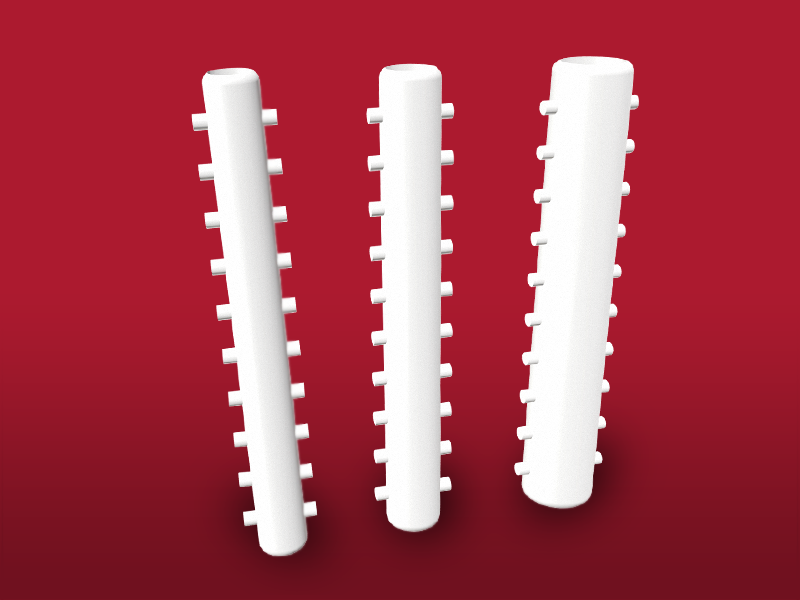
Paediatric tracheobronchial silicone stent of small diameters and short length, thin-walled, highly flexible and transparent, with spurs arranged in a linear and opposing layout.

Product code: SP
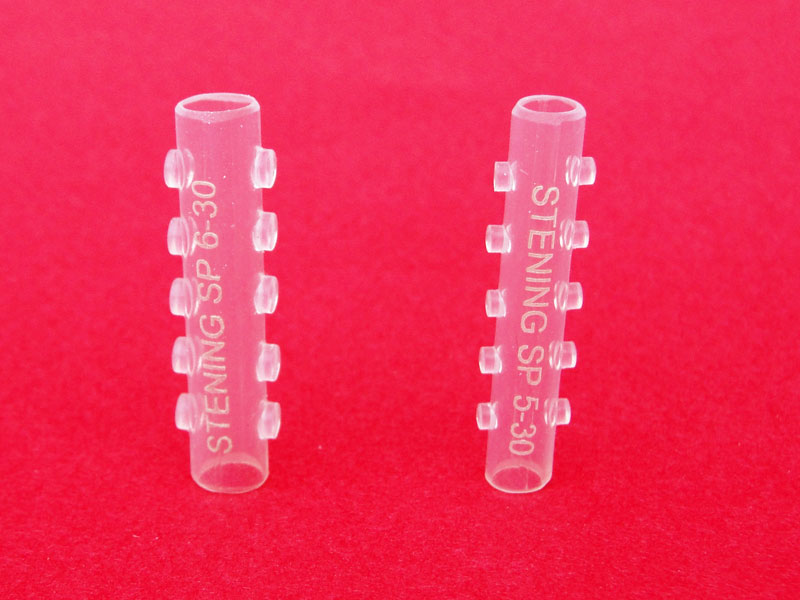
Paediatric tracheobronchial silicone stent Stening® Straight Paediatric (SP)
Straight paediatric silicone stent Stening®
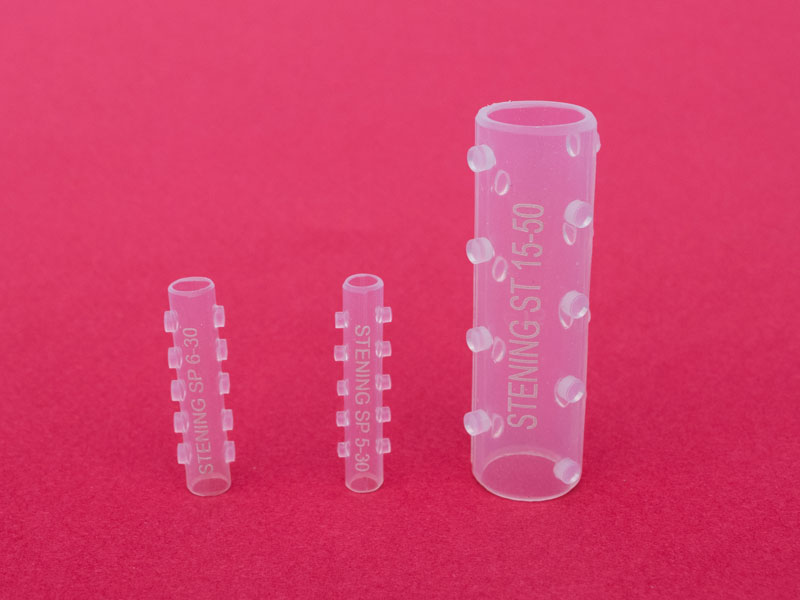
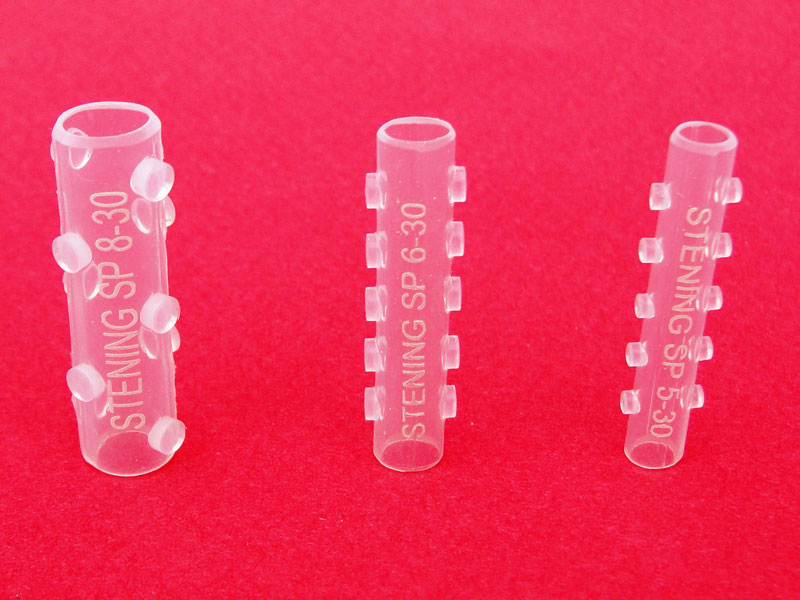
Size comparison of the straight paediatric stent
Application in tracheal or bronchial compression
Application in airway obstruction
Bronchology · Pediatric Stents

Stening® Straight Paediatric

Code SP

The Stening® Straight Paediatric —also known as a straight paediatric stent or paediatric tracheobronchial stent— is characterized by its small diameters, short length, thin wall, great flexibility and transparency.

It features spurs arranged in a linear and opposing layout, which improve its fixation in the paediatric airway.

Material
Biocompatible silicone
Line
Bronchology · Pediatric
Presentations
7 sizes (Ø5 to 8, 20 to 40 mm)
Technical specifications

Product information

Review the indications, dimensions, how to use, care and warnings of the Stening® Straight Paediatric.

Clinical indications

The Stening® Straight Paediatric is indicated for the management of the compromised airway in the paediatric patient.

  • Tracheal or bronchial compression.
  • Airway obstruction of various etiologies.

Available dimensions

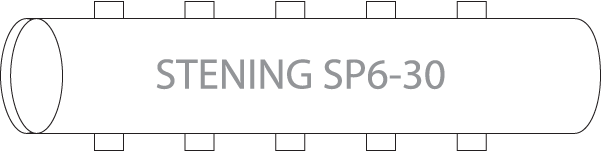
The Stening® Straight Paediatric is offered in three diameters (5, 6 and 8 mm) and lengths from 20 to 40 mm.

Dimensional diagram of the Stening® Straight Paediatric
CodeDiameterLength
SP5-205 mm20 mm
SP5-305 mm30 mm
SP6-206 mm20 mm
SP6-306 mm30 mm
SP8-208 mm20 mm
SP8-308 mm30 mm
SP8-408 mm40 mm

Measurements expressed in millimeters (diameter and length). For specific inquiries about sizes, instruments, bronchoscopes or introducers, contact us at (+54) 11 4553-5070 or (+54) 11 4551-2333.

Insertion technique

The procedure is performed under general anesthesia.

Orotracheal intubation is performed with a rigid bronchoscope. The required length and diameter of the stent must be properly determined. The prosthesis can be folded and introduced into a previously lubricated prosthesis ejector, then expelled into the airway near the area to be treated, or applied directly with the bronchoscope by sliding it through its interior.

Removal technique

Removal of the stent also requires access to the trachea with a rigid bronchoscope. It is doubly simple owing to the tiny dimensions of the device and, secondarily, because the growth of the paediatric patient causes the stent to tend to release spontaneously. An alligator-tooth forceps or similar will complete the removal maneuver.

Other methods of implantation and removal are possible depending on the operator’s experience and preferences.

Post-implant care

Recommendations for the follow-up of the paediatric patient with a stent.

  • Periodic check-ups according to medical criteria.

Warning of use

Important

The device must not be reused, in order to avoid cross-contamination.

Also known as: SP stent · straight paediatric stent · paediatric tracheobronchial stent · paediatric silicone stent

Need more information
about this device?

Contact us for personalized technical advice, size selection, custom manufacturing or inquiries about international shipping.

Chat on WhatsApp