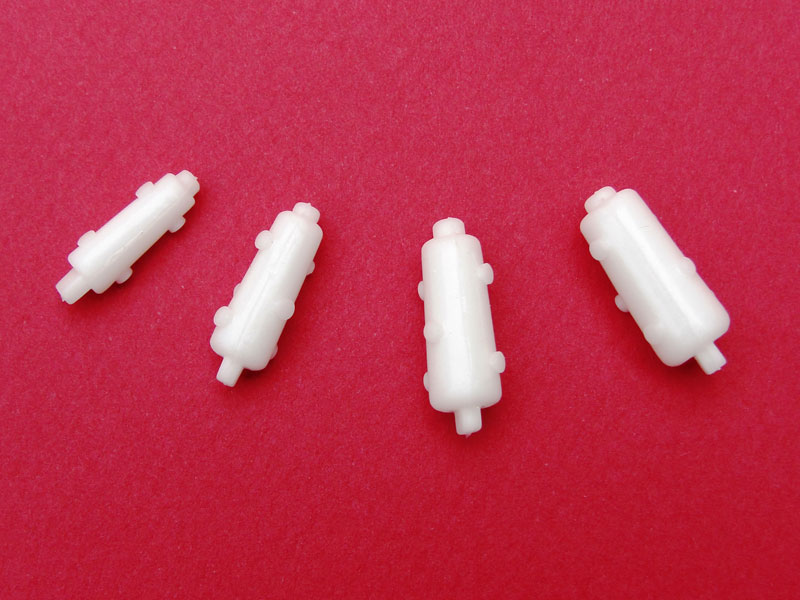
Solid radiopaque biocompatible silicone bronchial spigot, intended for selective bronchial occlusion in the treatment of bronchopleuropulmonary conditions such as bronchopleural fistula and persistent air leak.
Product code: MS10


Code MS10
The Stening® Solid Stent —also known as a bronchial spigot or bronchial plug— is made of silicone and intended for bronchial occlusion in the treatment of various bronchopleuropulmonary conditions, such as bronchopleural fistula and persistent air leak in cases of pneumothorax that cannot be treated with conventional surgery. The Stening® Solid Stent is radiopaque.
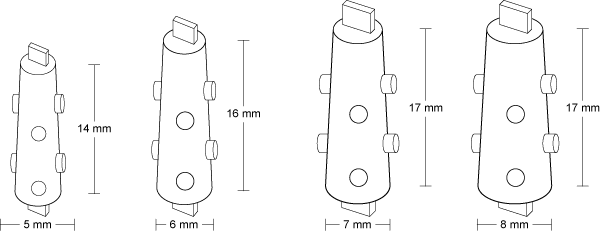
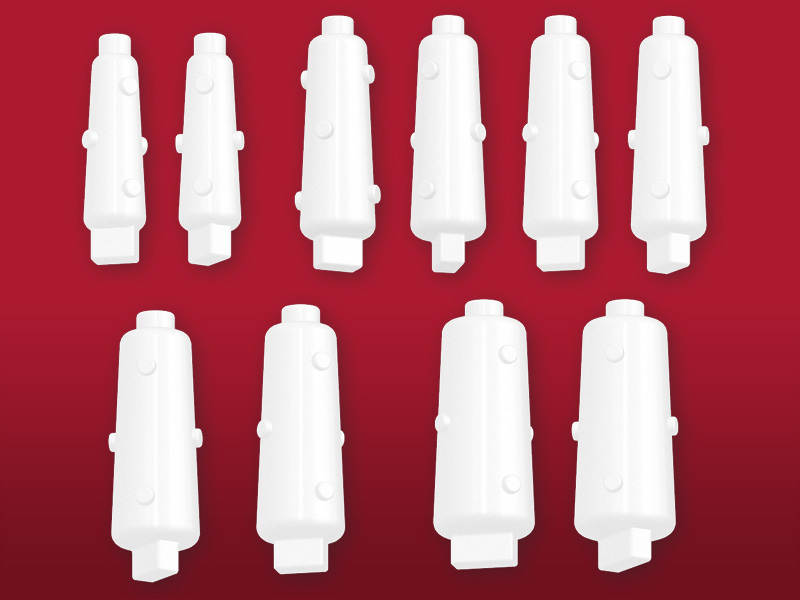
Presentation: the Stening® Solid Stent MS10 is supplied in a pack containing two units of 5 mm larger diameter, four of 6 mm, two of 7 mm and two of 8 mm.
Review the indications, available dimensions, instructions for use, care and warnings of the Stening® Solid Stent.
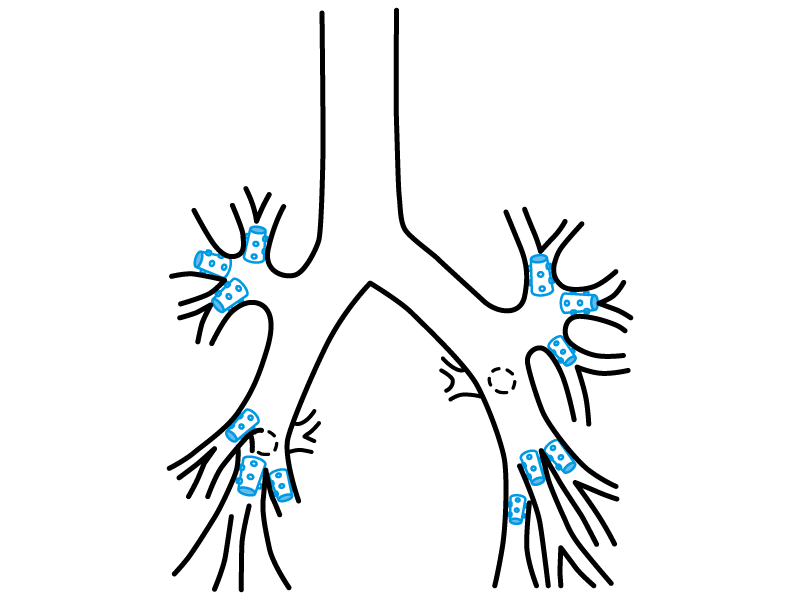
The Stening® Solid Stent is indicated for selective bronchial occlusion in various bronchopleuropulmonary conditions.
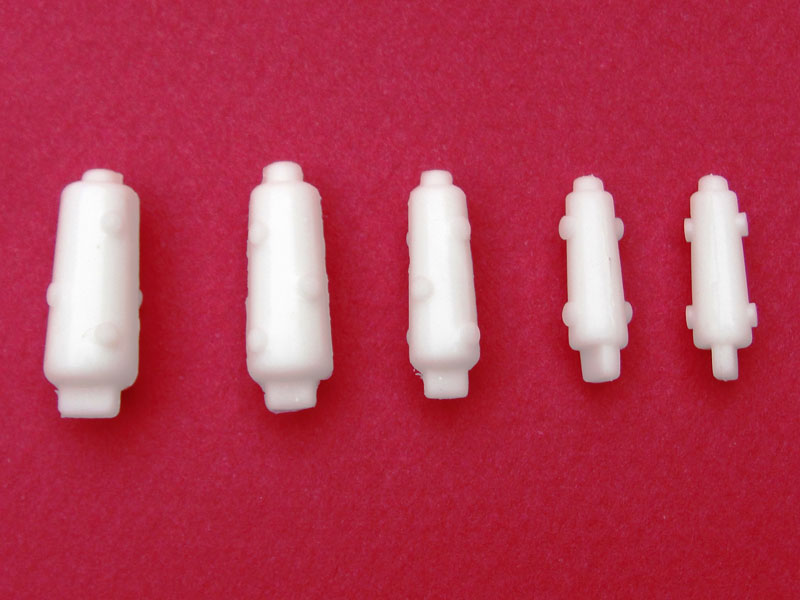
The Stening® Solid Stent MS10 is supplied in a pack of ten units in four larger diameters (5, 6, 7 and 8 mm), to fit the bronchus or fistulous orifice to be occluded.

| Larger diameter | Units per pack |
|---|---|
| 5 mm | 2 |
| 6 mm | 4 |
| 7 mm | 2 |
| 8 mm | 2 |
One or more spigots of suitable size are selected, exceeding the diameter of the fistulous orifice or the bronchus to be occluded. For specific inquiries about instruments, bronchoscopes or introducers, contact us at (+54) 11 4553-5070 or (+54) 11 4551-2333.
The Stening® Solid Stent is implanted with the aid of a rigid bronchoscope, and general anesthesia is required.
Once the placement site and its size have been determined — established by comparison with the known diameter of the endoscopic instrument being used — one or more solid stents of the appropriate provided sizes will be chosen, exceeding the diameter of the fistulous orifice or the bronchus to be occluded, so that it fits the bronchus or stump in which it will be lodged.
The device has a flat tab at its posterior end, from which it is grasped with an alligator-type rigid bronchoscopy forceps. The forceps-stent assembly is then introduced through the bronchoscope to guide it to its final destination in the bronchus or fistula to be occluded, inserting the solid stent into the orifice.
The entire described procedure is performed under direct vision using the bronchoscopy optics.
Removal is carried out by performing the reverse maneuvers. Due to its radiopaque properties, the device can be identified on radiographs.
Recommendations for the follow-up of the patient with a solid bronchial spigot.
The device must not be reused, in order to prevent cross-contamination.
Contact us for personalized technical advice, size selection, custom manufacturing or inquiries about international shipping.