Bronchology · Special prosthesis

Stening® Cone MD

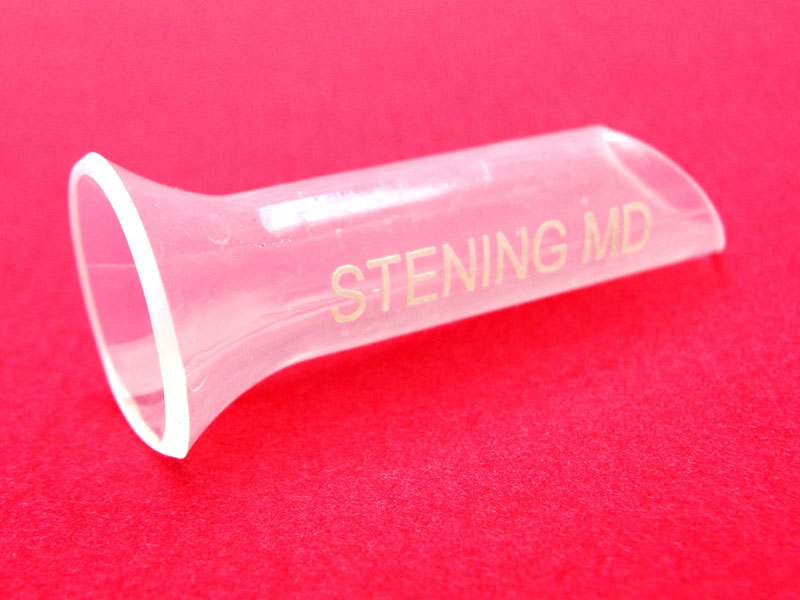
Silicone cone stent intended to prevent or reduce the passage of esophageal fluids into the airway through broncho-esophageal fistulas and communications. Distal end beveled at 45° and proximal end widened into a cone, without anchors and with smooth walls.

Product code: MD
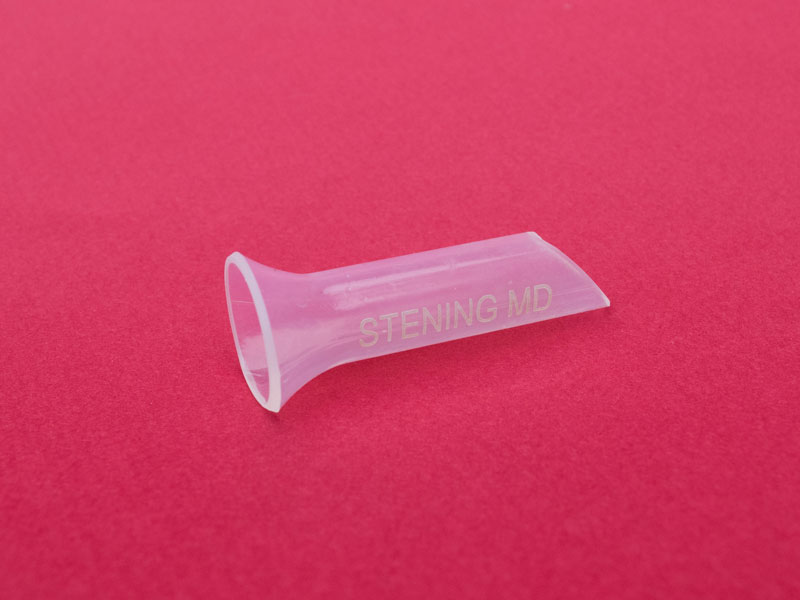
Broncho-esophageal cone stent in silicone Stening® Cone MD (MD)
Cone stent in silicone Stening® Cone MD with a 45° beveled end
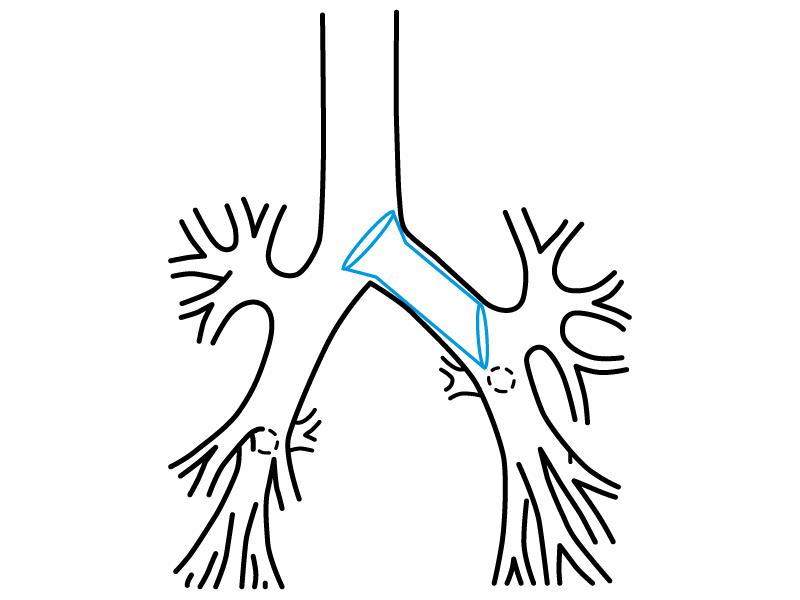
Suggested use of the Stening® Cone MD in the tracheobronchial tree
Application of the Cone MD in bronchial stenosis
Bronchology · Special prostheses

Stening® Cone MD

Code MD

The Stening® Cone MD —also known as a broncho-esophageal cone stent or cone stent— is specifically intended to prevent or reduce the passage of esophageal fluids into the airway through fistulas and communications between the airway and the digestive tract, especially when the left main bronchus is invaded by esophageal carcinoma.

Its distal end is beveled at 45° and the proximal end widens into a cone, in order to rest on the carinal slope and the tracheal wall. The Stening® Cone MD is a stent without anchors: its smooth walls allow complete contact with the bronchial mucosa along its entire length.

It is also useful in other conditions of the large bronchi, such as cicatricial stenosis and those secondary to end-to-end anastomosis, in bronchial reimplantation and in the bronchial complications of lung transplantation. It can be used to replace a straight stent, following the treatment of occlusions of the large bronchi by bronchogenic carcinoma or by bronchial localizations of other carcinomas.
Material
Biocompatible silicone
Line
Bronchology
Design
Conical, without anchors
Technical specifications

Product information

Review the indications, dimensions, instructions for use, care and warnings of the Stening® Cone MD.

Clinical indications

The Stening® Cone MD is indicated for broncho-esophageal communications and other conditions of the large bronchi.

  • Abnormal broncho-esophageal communication due to esophageal carcinoma.
  • Post-traumatic broncho-esophageal communication.
  • Bronchial stenosis.
  • Following the resection of carcinoma in a main bronchus.
  • Traumatic bronchial rupture.

Dimensions and geometry

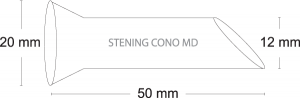
The Stening® Cone MD has a distal end beveled at 45° and a proximal end widened into a cone, which rests on the carinal slope and the tracheal wall. It is a stent without anchors, with smooth walls.

Diagram of the Stening® Cone MD: distal end beveled at 45° and proximal cone

The diagram shows the reference geometry of the device. For specific inquiries about sizes, instruments, bronchoscopes or introducers, contact us at (+54) 11 4553-5070 or (+54) 11 4551-2333.

Implantation technique

The Stening® Cone MD can be introduced with a wide bronchoscope or with an applicator. If an applicator is available, it consists of two telescopic metal tubes of different lengths.

  1. Introduce the optics inside the applicator and then mount the Stening® Cone MD on the end of the applicator. The beveled end of the Cone must remain in the distal position and oriented so that its oblique end faces the entrance of the upper lobar bronchus.
  2. Perform orotracheal intubation with the optics – introducer – Stening® Cone assembly, under direct endoscopic vision. Advance toward the affected main bronchus, guiding the assembly inside the trachea until reaching the main bronchus. Upon reaching the affected area, advance until exceeding the distal edge of the fistula or bronchial lesion by one centimeter.
  3. Then, keep the external tube of the introducer fixed and gently withdraw the internal one together with the optics.
  4. The Stening® Cone will be released inside the bronchus. Remove the applicator and re-intubate the airway with a conventional bronchoscope to perform an inspection.

Post-implantation care

Recommendations for follow-up of patients with a bronchial stent.

  • Maintain moisture of secretions when present, with frequent nebulizations using warm isotonic saline solution.
  • Periodic monitoring according to medical criteria.

Use warning

Important

The device must not be reused, in order to prevent cross-contamination.

Also known as: broncho-esophageal cone stent · cone stent · stent for broncho-esophageal fistula · conical bronchial prosthesis · MD

Need more information
about this device?

Contact us for personalized technical advice, size selection, custom manufacturing or inquiries about international shipping.

Chat on WhatsApp