Clinical indications
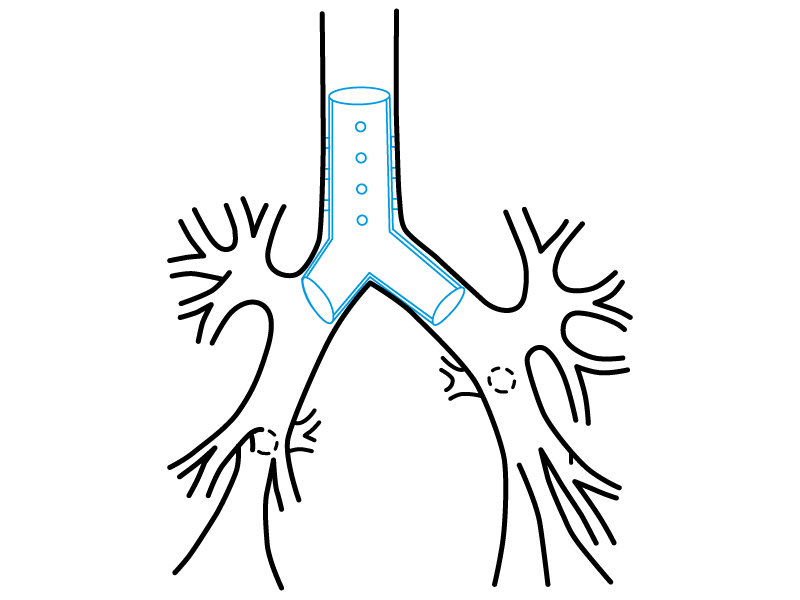
The Stening® “Y” is indicated for obstructions involving the tracheal bifurcation, the carina and both main bronchi, especially in advanced neoplastic conditions and dynamic airway compression.
- Tracheal neoplasms
- Extensive tracheobronchial neoplasm, with or without involvement of the carina and/or its slopes
- Neoplasms affecting both main bronchi
- Esophageal carcinoma with airway invasion
- Tracheoesophageal or tracheocutaneous fistula
- Following laser photoresection, cryotherapy or electrocautery, to maintain airway patency
- Extrinsic compression or submucosal involvement
- Tracheal stenosis
- Tracheobronchial stenosis
- Tracheobronchomalacia
- Amyloidosis
- Excessive dynamic airway compression
Additional uses
Due to its length and design, it allows other uses at the physician’s discretion.
The Stening® “Y” has been used successfully in tracheostomized patients and on mechanical ventilation, in combination with a tracheostomy cannula, to enable ventilation of critically ill patients when other methods are not possible.
Available dimensions
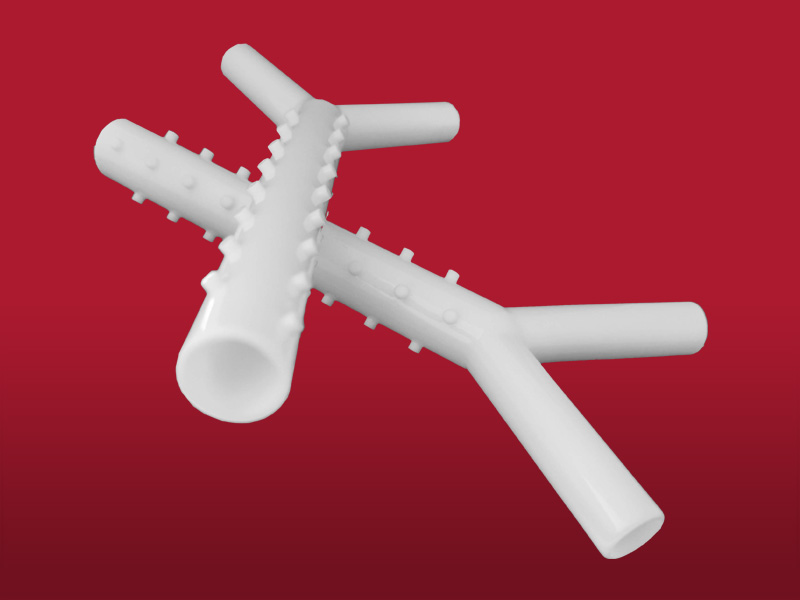
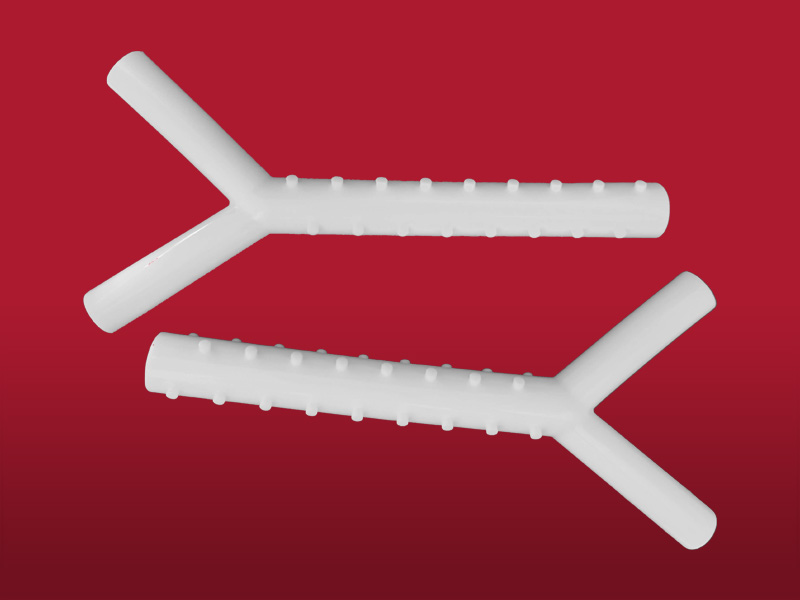
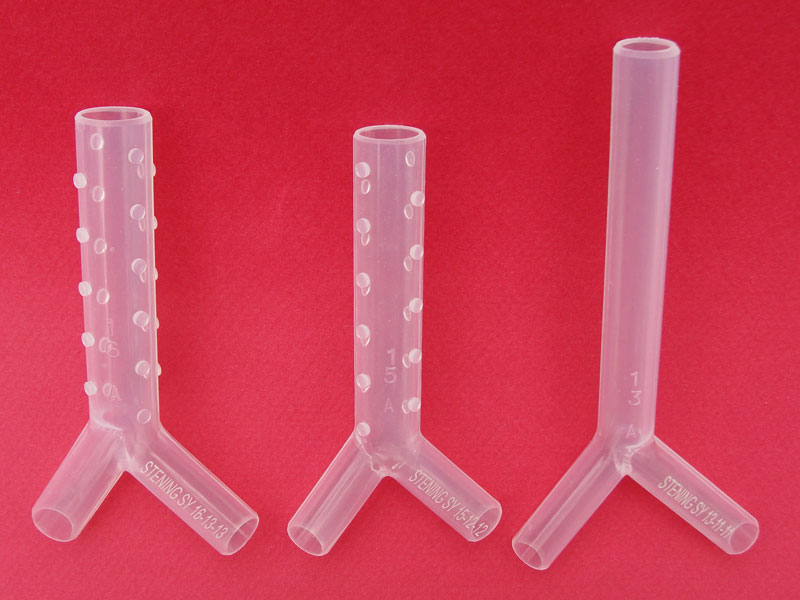
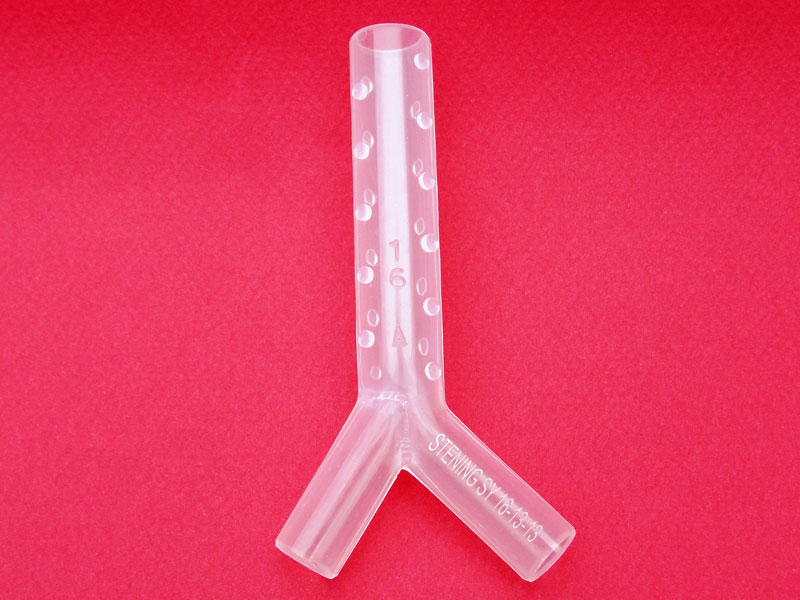
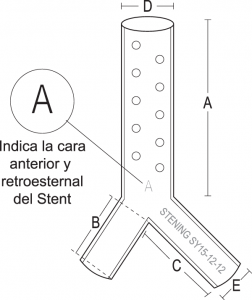
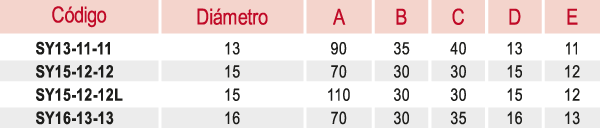
The Stening® “Y” is manufactured in different combinations of branch diameter and length, allowing the prosthesis to be adapted to each patient’s anatomy. The letter A indicates the anterior, retrosternal face of the stent.
All sizes are always available. For specific inquiries about instruments, bronchoscopes or introducers, contact us at (+54) 11 4553-5070 or (+54) 11 4551-2333.
Implantation
The procedure is performed under general anesthesia. Implantation of this type of prosthesis must be carried out by experienced personnel. The stent may be mounted on a special forceps for implanting “Y” prostheses.
Lubricate the tip of the forceps with lidocaine gel. Insert the forceps into the stent so that its jaws enter the bronchial branches of the prosthesis. Ventilate the patient with oxygen until reaching the highest possible saturation. The patient is then extubated, withdrawing the tracheoscope from the airway. Immediately, with the aid of a laryngoscope, the forceps carrying the stent is guided toward the trachea. As the jaws of the forceps close, the bronchial branches of the stent are brought together, and in this position it passes between the vocal cords toward the trachea.
The maneuver continues by advancing the forceps-stent assembly within the trachea until approaching the carina. When the end of the forceps-stent assembly is near the tracheal carina, the jaws of the forceps should be opened gently to perceive the arrival of the prosthesis at the tracheal bifurcation. At this point the jaws are fully opened so that the bronchial branches of the stent enter the main bronchi. The button on the forceps that holds the stent against the carinal edge is then pressed while the forceps is withdrawn.
The complete maneuver must be quick, since it is performed with the patient extubated and in apnea. We recommend using direct-vision optics to ensure that the stent passes the vocal cords and is not accidentally directed toward the esophagus. To do this, the optics must accompany the forceps in parallel during the maneuver, allowing confirmation that the stent enters through the glottis. This option is only possible with the aid of a second operator who keeps the intubation laryngoscope in the correct position, while the bronchoscopist uses the dominant hand for the stent insertion forceps and the other hand to hold the optics.
Other implantation techniques are possible, such as introducing the folded prosthesis inside a bronchoscope of sufficient caliber, then pushing it through with alligator forceps or a smaller-diameter bronchoscope once it is near the tracheal carina. The implantation maneuver can be completed by adjusting the prosthesis with forceps.
Removal
Intubation is performed with a tracheoscope. Removal is simpler. The stent should be grasped by its proximal edge with strong forceps and removed gently by traction, extracting the prosthesis together with the tracheoscope.